
Media · News · Gear · 08.09.2026
Shoes and kit: what to wear for a 7 or 14 km trail race in November
What is genuinely mandatory in Belgium, which shoes hold in Ardennes mud, and everything you do not need over 7 or 14 km.

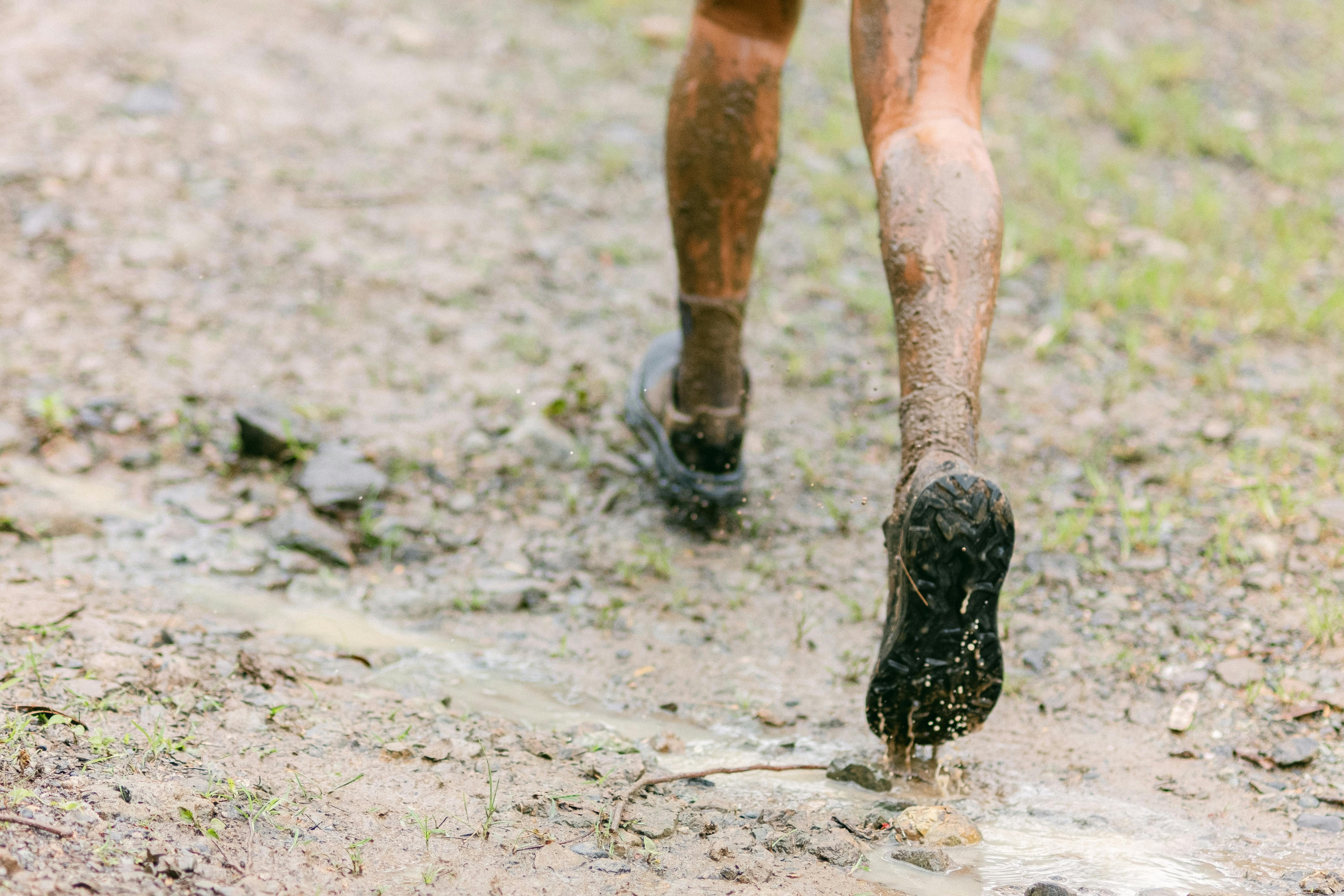
In mid-November the Ardennes trails are greasy, it is 4 °C in the morning and 8 °C in the afternoon, and fallen leaves hide the roots. That is no reason to carry an ultra-runner's pack: here is what really matters for 14 November.
What is genuinely mandatory: the cup
The RTX is run without disposable cups. That is not a whim: it has become the norm in Belgium, from the Boucles Ardennaises to the Trail des Fantômes, and it is the one thing you must slip into your pocket. A folding cup, a soft flask or a small bottle: your call.
The rest of the safety kit — whistle, survival blanket, charged phone — is only required in Belgium from the long distances upwards. At the Trail du Brabant wallon, for instance, a phone is mandatory only from 42 km. Over 7 or 14 km these are recommendations, not obligations.
Shoes: the only real investment
What makes the difference on our trails is 4 to 8 mm lugs and rubber that grips when wet. A road shoe on wet leaves across a slope means a guaranteed slide. Here are models genuinely available this autumn (indicative prices noted in September 2026, worth checking in store):
- Saucony Peregrine 16 — €160 — the default choice, at home everywhere: Vibram Megagrip, 4 mm lugs, 271 g.
- Salomon Speedcross 6 — around €150 — the mud reference, with deep chevron lugs. Less pleasant as soon as the path turns hard and fast.
- Hoka Speedgoat 7 — around €165 — generous cushioning to swallow the descents. The Speedgoat 6 is being discounted right now: a good deal.
- Scott Supertrac 3 — around €140 to €150 — lugs angled one way at the front and the other at the back: traction uphill, braking downhill.
- inov-8 Mudtalon Speed — around €140 to €150 — 8 mm self-cleaning lugs, the specialist for soaked ground. Not very comfortable on hard surfaces.
- La Sportiva Bushido III — around €175 — stability and precision on technical ground, for runners who already feel at ease.
- VJ iRock 4 — €179 — the grippiest butyl rubber on wet rock, and the lightest of the list (240 g).
- Nike ACG Pegasus Trail — €149.99 — perfect for rolling paths and a first trail race in dry weather, but it is not a mud shoe.
The best shoe is still the one that fits your foot: try it on at the end of the day, with your running socks, and keep half a centimetre in front of your toes for the descents.
What about those Nike "OCG Picklejus"?
A quick clarification, because people keep asking: Nike's outdoor line is called ACG, for *All Conditions Gear*, officially relaunched in February 2026. And the Nike ACG Picklejus really does exist: it was unveiled during UTMB week in Chamonix in August 2026. Its name comes from pickle juice, runners' near-mythical remedy against cramp. Nike introduces a GOATEK outsole with it, announced at +45 % grip on wet ground, and a dual-density ZoomX foam.
Two details, though: it is designed for efforts of 160 km and more in the mountains, and it only ships at the end of 2027. For 14 November, look instead at the ACG Pegasus Trail or the ACG Zegama — or any model from the list above.
Socks, the detail that saves your race
They are your first defence against blisters, well before the shoe. Merino for temperature and moisture management, synthetic for faster drying, a high cuff against stones and brambles. Never cotton.
Dressing for an Ardennes November
The rule that works: dress as if it were 5 °C warmer than forecast. You will be cold for two minutes at the start, and comfortable for the rest.
- A long-sleeved technical layer, or a t-shirt with arm sleeves you can roll down once you warm up.
- A water-repellent windbreaker is enough in most cases for 1 to 2 hours of effort. A proper waterproof jacket with a membrane and hood becomes useful if the rain settles in — it is not mandatory over our distances.
- Thin gloves and a buff: 20 grams that change everything at the start, and that fit in a pocket.
- Dry clothes for the finish: a dry t-shirt and a warm jacket in your bag. That is where you catch cold, not while running.
What you do not need
- A head torch: start at 10:00 or 10:15, finish before noon. The sun sets around 16:53 on 14 November — you run in full daylight.
- Poles: allowed, but over 7 or 14 km they get in the way more than they help. If you start with them, you keep them to the finish.
- Removable spikes: they are made for snow and ice, not mud. A good lugged outsole does the job better.
- A full hydration pack: a belt or a flask is plenty, and the aid stations are shown on each route profile.
Still hesitating between the two distances? We wrote an article about it: 7 or 14 km, how to choose. And everything required on the day is in the race rules.